

Sinners
Updated: Jul 12, 2025
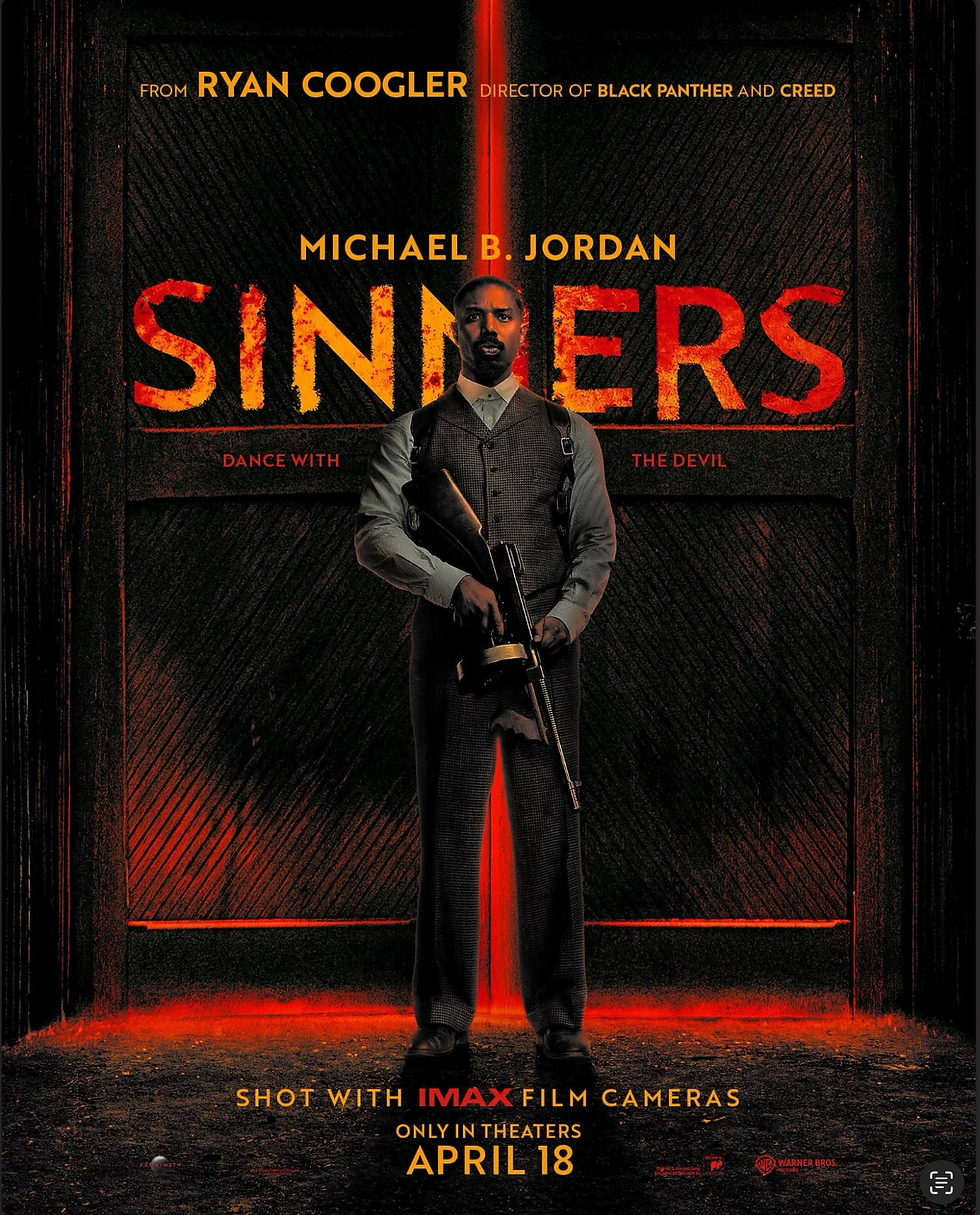
There’s a moment halfway through Sinners so transcendent, I realized I was watching a modern masterpiece. Music, it turns out, is the key to the universe—to all time and space. The moment is magical, overwhelming. I can’t remember the last time I felt so mesmerized, so exalted.
Set in Mississippi in the early 1930s, just after World War I, the film presents a vivid slice of Black America at a time when racial tensions burned at a fever pitch. The harsh realities of segregation in the Jim Crow South are rendered with such precision and weight that they become their own kind of horror story but they remain firmly on the periphery. Every period detail is carefully constructed in the film’s hour-long exposition, building toward the main event music and vampires.
Vampires, in this context, are the perfect allegory. In Sinners, vampires serve as a powerful allegory for the systemic exploitation of Black culture and life—draining, consuming, and enduring like racism itself. Their presence literalizes the horror of segregation-era America, making the unseen forces of oppression visible, visceral, and impossible to ignore.
The ensemble cast is spectacular. And while the plot takes its indulgent time to unfold, Sinners is less concerned with momentum than with presence. Every interaction, every conversation feels lived in and deliberate. When the bloodletting begins, it’s swift, visceral, and yet strangely beside the point. The supernatural elements could almost be removed without breaking the narrative but they hold the audience, across all backgrounds, in rapt attention.
This is a loooong film, punctuated by two codas - one entertaining, the other arguably superfluous - yet together they reinforce the scale of what Sinners is: an epic. Bold, patient, and unforgettable.
Comments